Easy Baklava Recipe
This baklava recipe brings Middle Eastern sweets to any kitchen. Making a delicious baklava recipe at home is easier than most people think. This iconic dessert combines flaky phyllo dough, crunchy nuts, and sweet honey syrup. The result is a golden, crispy treat that melts in your mouth.
Baklava recipe has been enjoyed for centuries across many countries. From Turkey to Greece, Lebanon to Iran, each culture claims this dessert. The combination of buttery layers, toasted nuts, and fragrant syrup creates unforgettable taste. Anyone can master this recipe with patience. This guide walks through every step for perfect baklava.
What is Baklava?
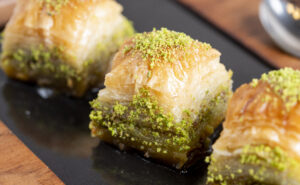
Baklava is a rich, sweet pastry made with layers of thin phyllo dough. Between layers, bakers spread melted butter and chopped nuts. After baking until golden, hot syrup pours over the pastry. The syrup soaks into every layer, creating signature sweetness.
The dessert has ancient roots dating back to the Ottoman Empire. Today, baklava remains a staple at celebrations throughout the Middle East. Each region has its own variation. Turkish baklava uses pistachios and diamond shapes. Greek baklava features walnuts cut into triangles. Some add rose water for floral notes.
How to Make the Best Baklava
The best baklava recipe requires quality ingredients and attention to detail. Fresh phyllo dough makes an enormous difference. Work quickly to prevent drying. Use generous butter between layers for crispiness. Freshly chopped nuts taste better than pre-ground. The syrup must be the right consistency.
The syrup determines success or failure. Make syrup while baklava bakes. Traditional rule: one component hot, one cold. Pour hot syrup over cold baklava, or vice versa. This helps syrup absorb properly. Syrup should flow easily like honey.
Ingredients
For the Pastry:
- 1 pound phyllo dough (16 ounces), thawed
- 1 and 1/2 cups unsalted butter, melted
- 4 cups mixed nuts, finely chopped (pistachios, walnuts, or almonds)
- 1/2 cup granulated sugar
- 1 tablespoon ground cinnamon
- 1/4 teaspoon ground cloves (optional)
For the Syrup:
- 2 cups granulated sugar
- 1 cup water
- 1 cup honey
- 1 tablespoon lemon juice
- 1 teaspoon vanilla extract
- 2 cinnamon sticks (optional)
Shopping Tips:
Buy phyllo from the freezer section. Choose thin, delicate sheets. Select raw, unsalted nuts. Smell nuts to ensure freshness. Use quality honey and European-style butter for best results.
Instructions
Step One: Prepare the Nuts
Pulse nuts in the food processor until finely chopped. Mix with sugar, cinnamon, and cloves. Set aside.
Step Two: Prepare the Pan
Preheat the oven to 350°F. Brush a 9×13-inch pan with melted butter. Keep butter warm.
Step Three: Prepare the Phyllo
Unroll phyllo and cover with a damp towel immediately. Trim the sheets to fit the pan.
Step Four: Layer the Bottom
Place one phyllo sheet in a pan, brush with butter. Repeat until half the sheets are used.
Step Five: Add the Nut Filling
Spread nut mixture evenly over phyllo base. Press down gently.
Step Six: Layer the Top
Continue layering remaining phyllo sheets with butter. Coat the final layer generously.
Step Seven: Cut Before Baking
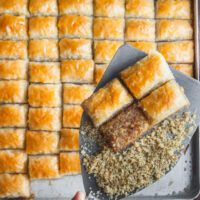
Use a sharp knife to cut into diamonds or squares. Cut all the way through to the bottom.
Step Eight: Bake
Bake for 45 to 50 minutes until golden brown. If the top browns too fast, tent with foil.
Step Nine: Make the Syrup
While baking, combine sugar, water, honey, and lemon juice. Boil, then simmer for 15 minutes. Cool completely.
Step Ten: Add Syrup
Pour cooled syrup over hot baklava immediately. Let sit uncovered at room temperature for 4 hours or overnight.
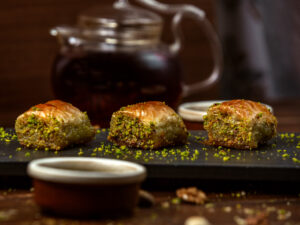
How to Assemble Baklava
Assembling baklava requires patience and gentle touch. Work in a cool, dry area. Keep phyllo covered except for sheets being used. Apply butter in thin, even coats. Too much butter makes greasy baklava, too little makes it dry. Smooth each layer before adding the next sheet.
The traditional ratio uses one-third phyllo for bottom, one-third for middle with nuts, one-third for top. Cut before baking using a very sharp knife. Wipe knife between cuts if sticky. The traditional diamond pattern looks elegant.
How to Keep Baklava from Getting Soggy?
Soggy baklava results from adding syrup incorrectly. Follow the temperature rule: one component hot, one cold. Never pour hot syrup over hot baklava. Syrup should be honey-thick, not watery. Using too much syrup also creates sogginess.
Ensure baklava bakes long enough to achieve complete crispiness. The entire pan should be golden brown. If unsure, bake for an extra five minutes. Properly baked phyllo stays crispy even after absorbing syrup.
Never cover baklava tightly while cooling. Moisture gets trapped, turning crispy layers soggy. Let cool completely uncovered. Once set, store loosely covered. Don’t use plastic wrap for the first few days. Always store at room temperature.
How to Store Baklava?
Short-Term Storage
Baklava stays fresh at room temperature for up to two weeks. Keep in the pan, covered loosely with a kitchen towel. Store in a cool, dry place away from heat. Baklava improves over the first few days as flavors meld.
Long-Term Storage
For longer storage, freeze for up to three months. Wrap individual pieces in plastic wrap, then place in freezer bags. Thaw at room temperature for a few hours. Don’t microwave frozen baklava.
Serving Tips
Always serve baklava at room temperature. Pairs wonderfully with strong coffee or hot tea. Some add whipped cream or ice cream.
Notes
Phyllo is delicate but forgiving. If sheets tear, piece them together with butter. Keep unused phyllo frozen until needed. Use within a few days once thawed.
Feel free to experiment with nut combinations. Classic options include all pistachios, all walnuts, or 50-50 mix. Toast nuts lightly before chopping. Avoid pre-chopped nuts as they’re often stale.
Adjust syrup sweetness to preference. For less sweet baklava, reduce sugar. Rose water adds authentic Middle Eastern flavor. Use just one teaspoon because it’s very strong.
Baklava is perfect for making ahead. Prepare two to three days before serving. The waiting period allows syrup to penetrate fully.
Nutrition Information
Per Serving (1 piece, about 2 inches):
- Calories: 280
- Total Fat: 16 grams
- Saturated Fat: 6 grams
- Cholesterol: 25 milligrams
- Sodium: 115 milligrams
- Carbohydrates: 32 grams
- Fiber: 2 grams
- Sugar: 20 grams
- Protein: 4 grams
Health Considerations:
Baklava is an indulgent dessert for special occasions. The nuts provide healthy fats, protein, and minerals. Walnuts offer omega-3 fatty acids. Pistachios contain antioxidants. However, baklava remains high in calories, sugar, and fat. Enjoy mindfully as an occasional treat.
Frequently Asked Questions
Why is my baklava not crispy?
Not baking long enough is the most common reason. Make sure it’s deeply golden brown. Using too much syrup or adding hot syrup to hot baklava also causes sogginess.
Can I use puff pastry instead of phyllo?
No, puff pastry creates a different texture and won’t produce authentic baklava. Phyllo is essential for thin, crispy layers.
How do I know when baklava is done baking?
Baklava is done when the top is golden brown and edges are slightly darker. It should be crispy on top.
Can I reduce the sugar?
Yes, you can reduce sugar by up to one-fourth cup in syrup. However, reducing too much affects syrup consistency.
Why did my phyllo break apart?
Phyllo breaks when it dries out from air exposure. Always keep unused sheets covered with a damp towel.
Conclusion
Making baklava recipes at home creates an impressive dessert that delights everyone. The combination of crispy layers, sweet syrup, and nutty filling is irresistible. While the process requires patience, the results are worth the effort.
The key to perfect baklava lies in quality ingredients and proper technique. Don’t rush any step. Follow temperature rules and storage guidelines for crispy, delicious baklava. With practice, anyone can master this traditional dessert and create perfect results.